Knowing how to set a stop-loss correctly is non-negotiable in forex trading. But using it with the right approach that’s what separates smart traders from frustrated ones.
A stop-loss should protect your capital without choking your trade too early. And to do that, you need to adapt it to the current market condition whether it’s trending, ranging, or volatile.
Let’s break down how to place effective stop-losses in different trading environments so you can minimize losses without limiting potential.
🔁 1. In Ranging (Sideways) Markets
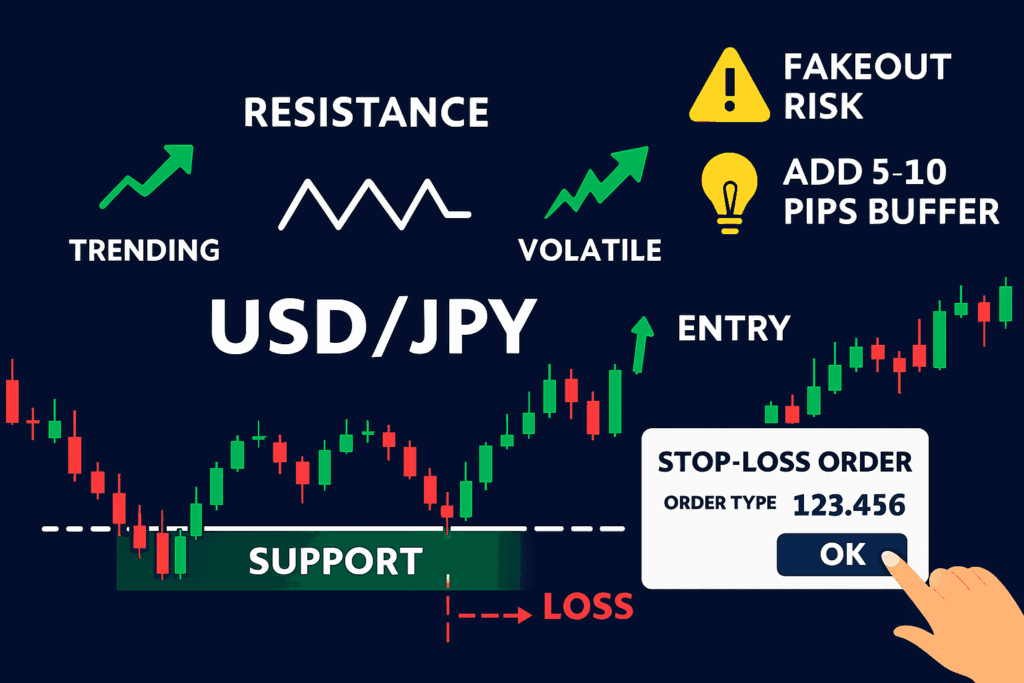
Goal: Trade between support and resistance
In a ranging market, price bounces between two clear horizontal levels. Your stop-loss should:
- Be placed just beyond support/resistance
- Allow room for minor fakeouts
- Avoid being triggered by normal range “noise”
Example:
- You go long near support at 1.0800
- Resistance is 1.0850
- Place SL around 1.0780 (20 pips below support)
🧠 Pro Tip: Add a buffer of 5–10 pips beyond the key level to reduce getting stopped by false breakouts.
📈 2. In Trending Markets
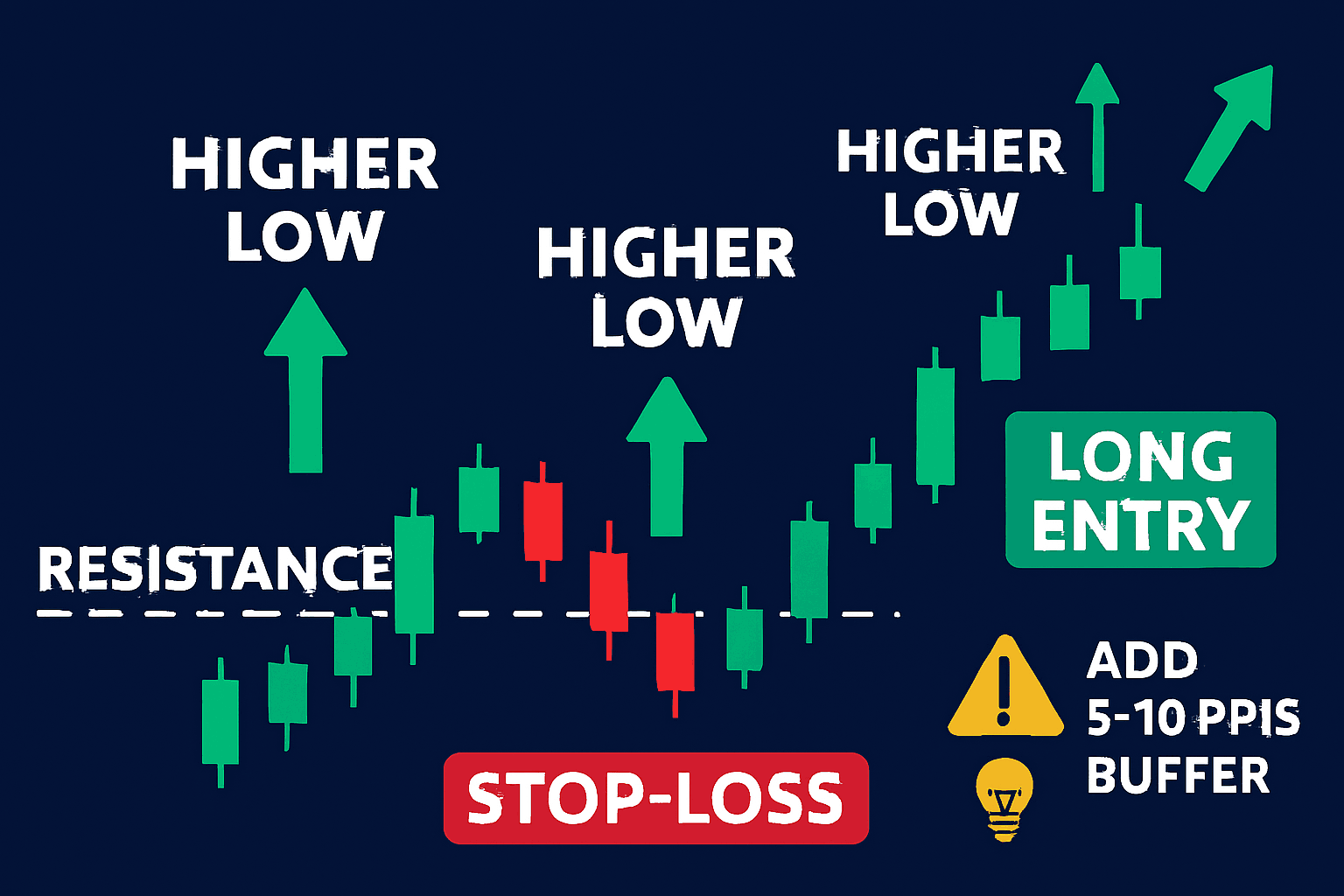
Goal: Ride momentum while avoiding pullback exits
In a strong uptrend or downtrend:
- Use higher lows (uptrend) or lower highs (downtrend) as stop levels
- Place SL below/above the last structure level, not just the candle
Example (uptrend):
- Price forms higher lows at 1.1000, 1.1025, 1.1050
- You enter long at 1.1060
- Place stop just below the last higher low e.g., 1.1045
This gives your trade breathing room while still protecting against trend failure.
🌊 3. In High-Volatility Markets (News Releases, London Open, etc.)
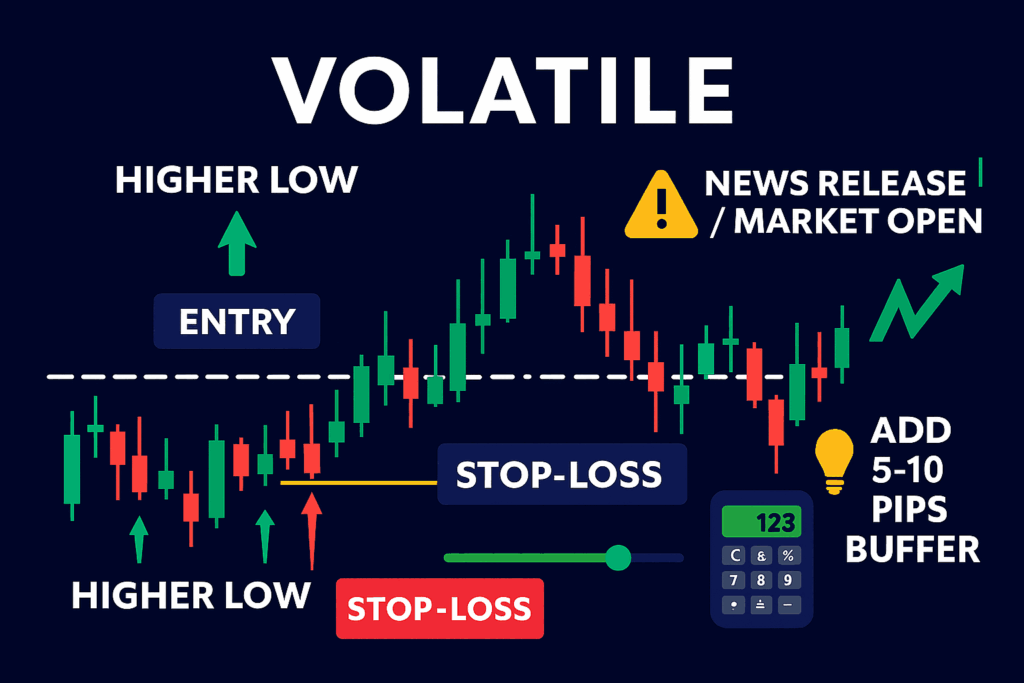
Goal: Protect from sudden spikes without being overexposed
In volatile sessions:
- Widen your stop-loss slightly to account for larger average candle size
- Reduce your lot size to maintain fixed risk
Example:
- Normally risk 20 pips SL at 0.5 lots
- During high-volatility time, SL is 40 pips → use 0.25 lots to risk the same amount
📐 Use a position size calculator to keep dollar-risk consistent even when your SL distance changes.
🎯 4. Based on Technical Indicators (ATR, Moving Averages, etc.)
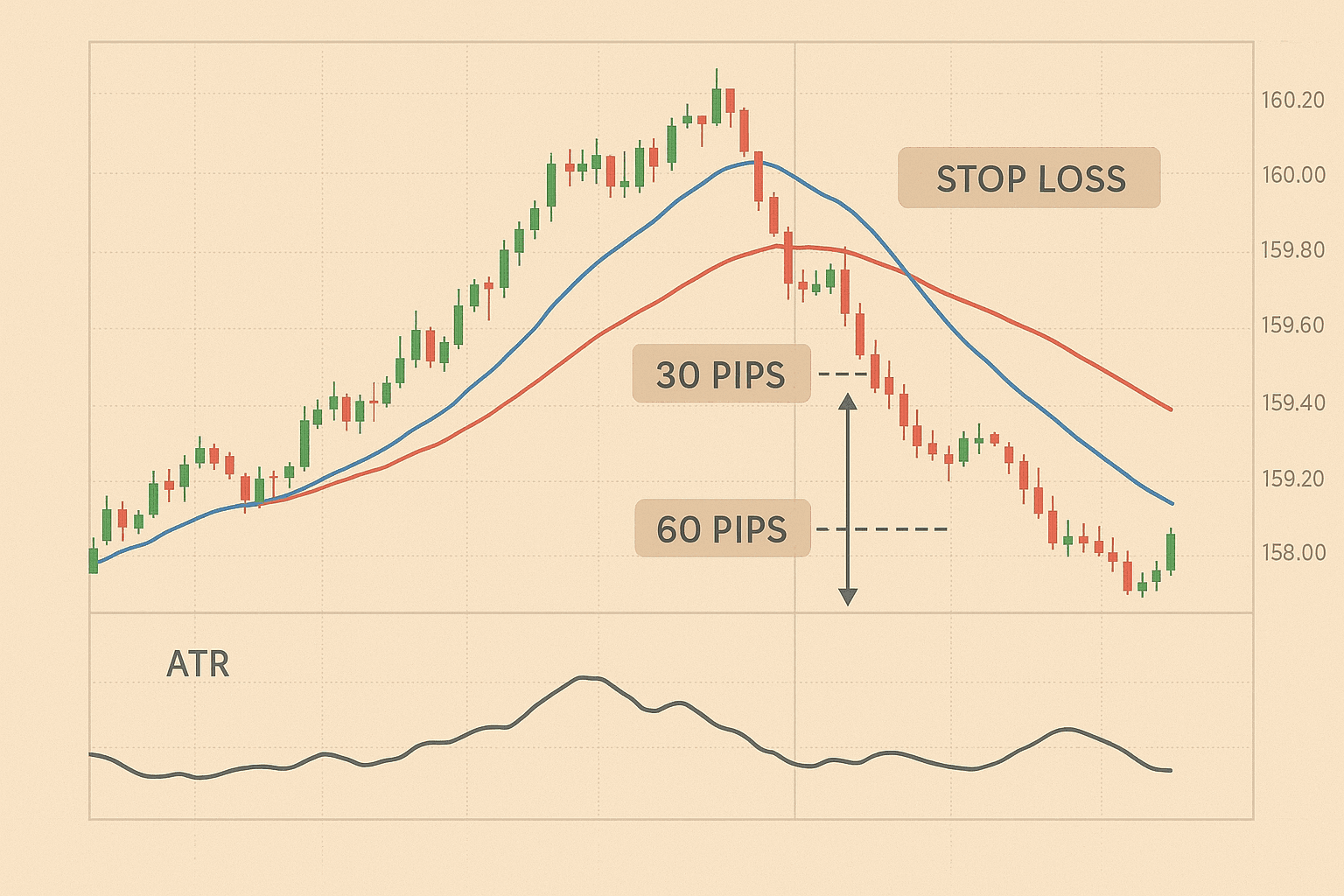
Using tools can help automate SL placement with logic.
ATR (Average True Range)
- Shows current volatility
- Multiply ATR value (e.g., 14-period) by 1.5 or 2 for stop distance
Example:
- ATR(14) = 25 pips → SL = ~38–50 pips from entry
- Keeps stop relevant to real price movement
Moving Averages
- Place stop just below/above a dynamic MA that price respects
- E.g., if using 50 EMA in an uptrend, place SL ~10 pips below it
🚫 Common Stop-Loss Mistakes to Avoid
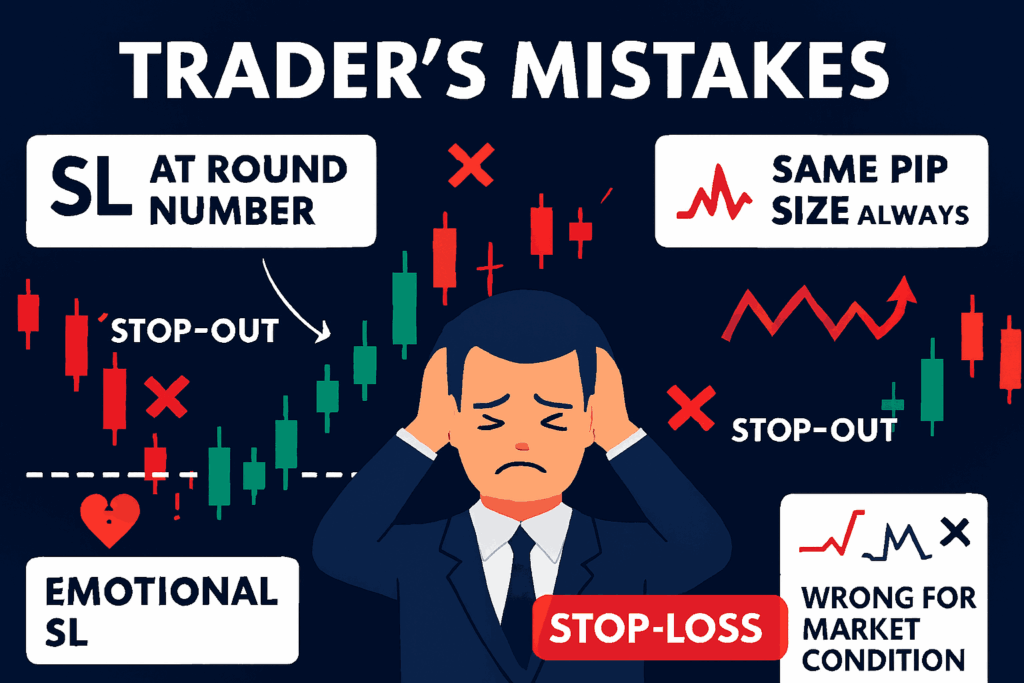
- ❌ Placing the SL at a round number (market loves to spike through 1.2000, 1.1500, etc.)
- ❌ Using the same pip size for every trade without context
- ❌ Setting SL based on how much you “want to lose” instead of structure
- ❌ Ignoring market condition (tight SL in a volatile session = instant stop-out)
✅ The Smart Stop-Loss Checklist
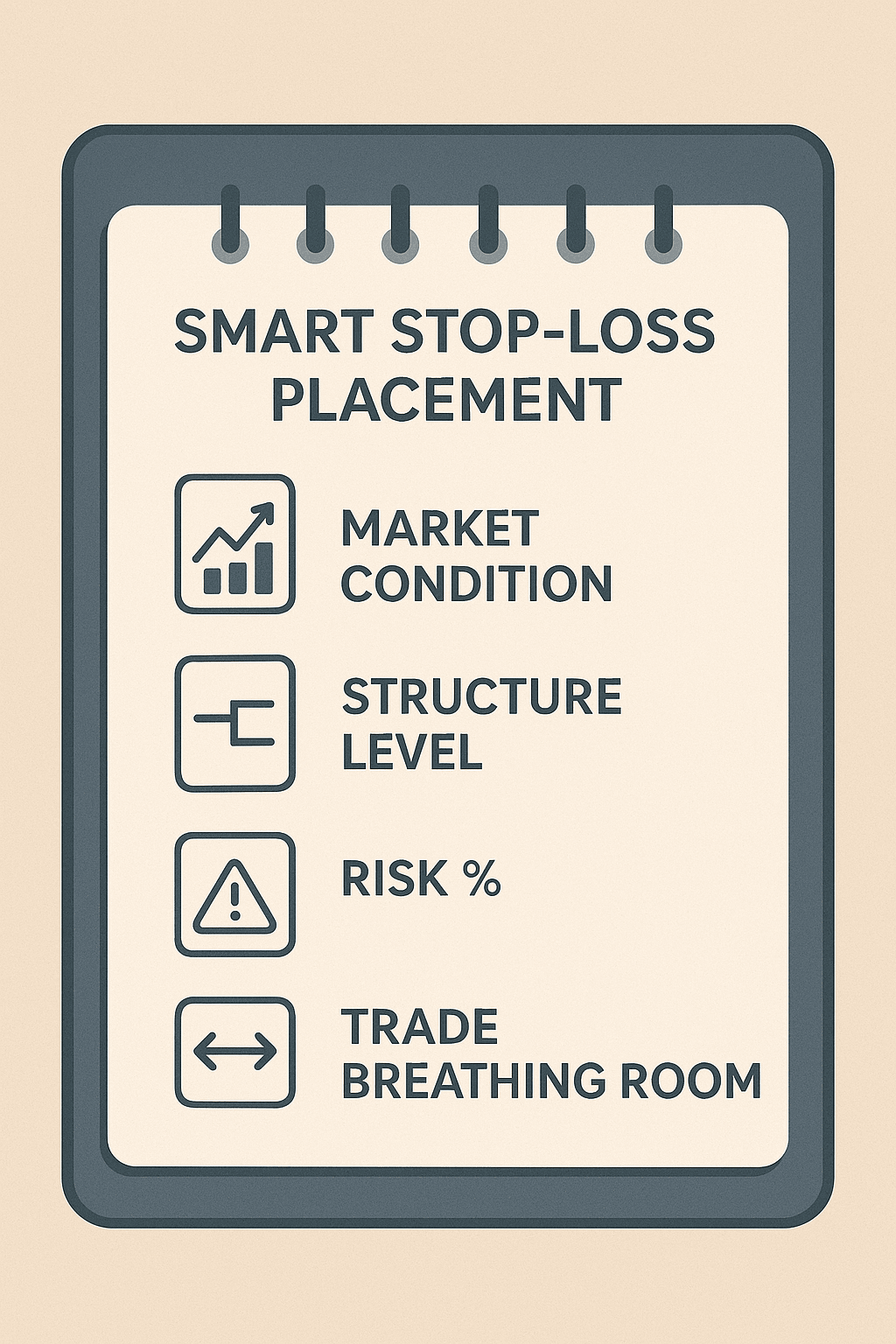
Before placing any trade, ask yourself:
- What’s the market condition ranging, trending, volatile?
- Am I placing my SL beyond a logical level (not just a number)?
- Have I adjusted lot size to match the stop size and fixed % risk?
- Does my stop give the trade enough room to “breathe”?
Final Thoughts
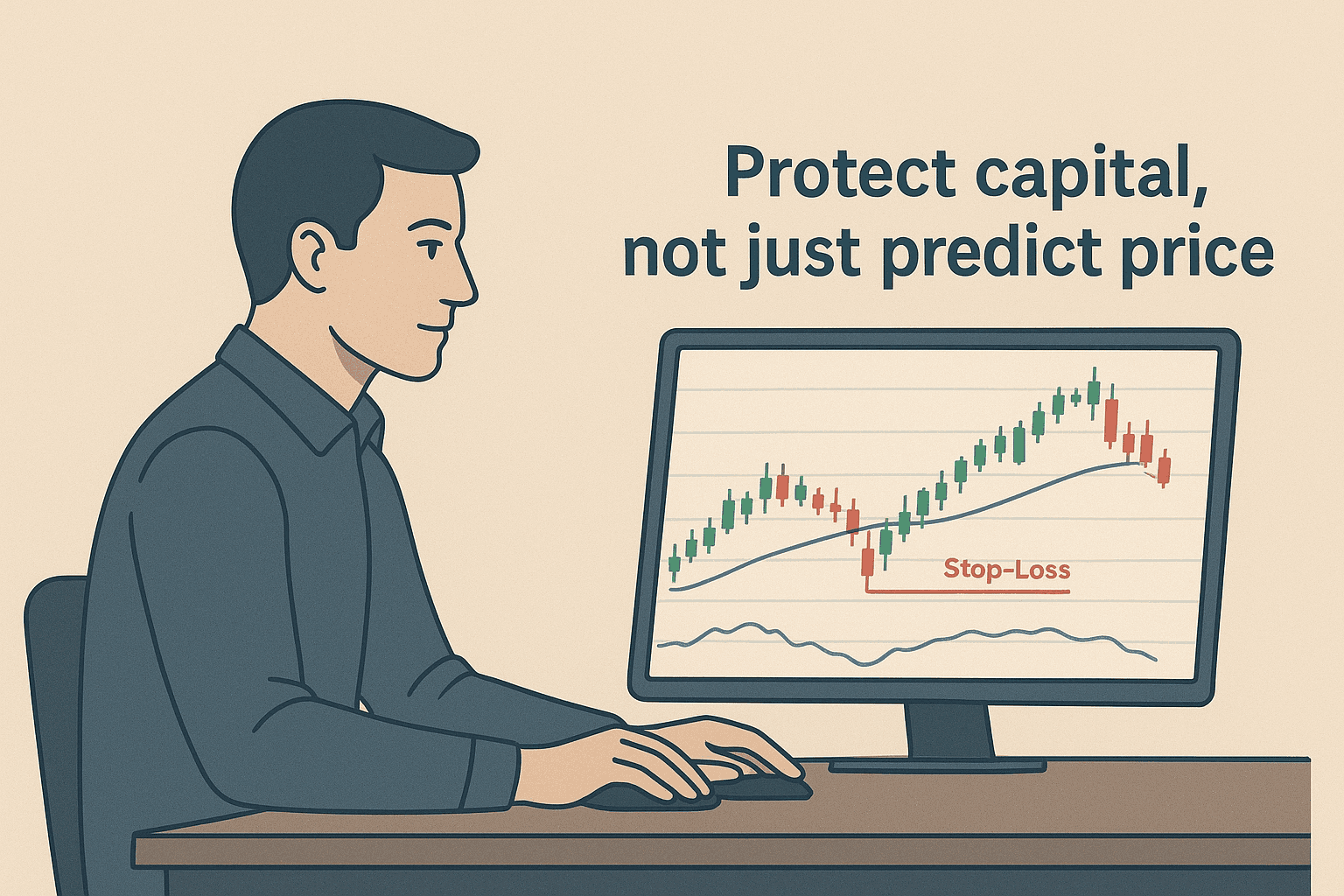
Setting a stop-loss isn’t just a safety step it’s a strategic decision. The right stop-loss:
- Keeps your emotions in check
- Protects your capital
- Allows your strategy to perform without interference
Adapt your SL to market conditions, back it with logic and you’ll instantly trade with more confidence and control.